


Lesson 3.Refrigerants
February 9, 2026Lesson 6.Refrigeration Circuit Components III: Expansion Devices
February 9, 2026Welcome to this lesson! Start by watching a recap video of this lesson.
Click on the gear icon to choose subtitles of your preferred language.
Heat Exchangers are used in the heat pump cycle to transfer heat between the refrigerant and the heat sink/heat source, without allowing the two mediums to mix. In the heat pump cycle, one heat exchanger is a condenser and the other is an evaporator.
5.1 Role in heat absorption/rejection (evaporator and condenser functions)
Evaporator
This is a heat exchanger which takes low temperature heat out of the source (ground or air) and transfers it to the circulating refrigerant. The refrigerant is forced by an expansion valve and the suction effect of the compressor to change from a liquid to a gas within the evaporator. This normally requires much heat (e.g. Boiling off water to its vapour form) and therefore the evaporator becomes very cold drawing in the required heat from its surroundings (usually air or water). In the evaporator, the refrigerant is evaporating at a relatively low pressure, and as it does, it is absorbing latent heat from the air or water flowing over the evaporator piping.
The evaporator’s function is to absorb heat from an external heat source such as outdoor air, ground, or water and transfer it to the refrigerant. It is usually located inside the heat pump unit.
Condenser
The condenser is the heat exchange surface that is responsible for rejecting heat from the heat pump system so it must be warmer than the surrounding medium. Because of this, the condenser should be at a high temperature and is accomplished by maintaining the pressure of the refrigerant in the condenser at a high level.
During the heating mode of the heat pump, the condenser receives high-pressure, high-temperature refrigerant gas from the compressor. It transfers heat to the indoor air or water circulating within a building. This action causes the refrigerant gas to condense into a liquid and then flow back to the evaporator for further circulation.
In cooling mode, the heat pump operates in reverse, absorbing heat from the indoor space and releasing it to the external environment. The condenser receives high-pressure, high-temperature refrigerant gas from the compressor.
Inside the condenser, the refrigerant gas releases heat to the outdoor environment. This release is achieved by circulating the refrigerant through a network of metal pipes designed to dissipate the heat absorbed from indoor air into the surrounding air.
As the refrigerant releases heat, it condenses back into a liquid and then is carried back to the evaporator for continued circulation. The operation of the condenser largely depends on the other two heat pump components: the evaporator and compressor.
5.2 Types of evaporators and condensers used in domestic heat pumps
There are several different types of heat pump condensers. The choice of it depends on factors such as the size of the heating or cooling area, installation complexity, desired energy efficiency, and availability of cooling resources. Two common types of heat pump condensers are: air- and water-cooled condensers.
Air-cooled condenser
As the name suggests, air-cooled condensers use air as the cooling medium. They are typically located inside a building (for air-to-air heat pumps) and consist of metal fins that help dissipate the heat absorbed from outdoor air into the indoor air.
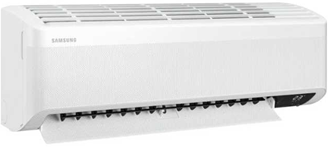
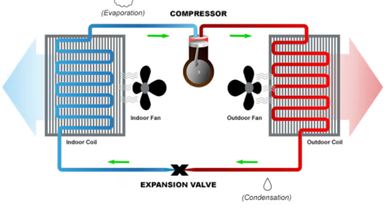
Figure 5‑1. Air- to- air heat pump condenser [1]
Depending on the design, the fan can be located on top or bottom of the condenser. They are commonly used in small-scale heat pump systems, such as residential buildings and light commercial applications. The low thermal conductivity and heat capacity of air mean they cannot be used for high heat load applications. However, they are cost-effective, less complex to install and maintain.
Water cooled condenser
During the heat pump’s heating mode, the condenser receives the high-pressure, high-temperature refrigerant gas from the compressor. It transfers the heat to the water circulated in the building. This action causes the refrigerant gas to condense into a liquid state, which then flows back to the evaporator to continue the cycle.
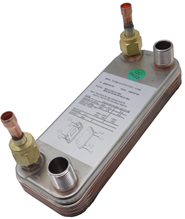
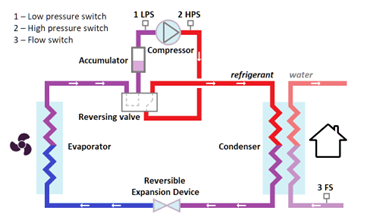
Figure 5‑2. Air- to- water and ground-to water heat pump plate condenser [2]
Evaporator
In a heating heat pump, the evaporator coil is typically located in the outdoor unit. It absorbs thermal energy from the ambient air—even in temperatures as low as -25°C in modern R290 systems. The refrigerant inside the coil evaporates as it collects this heat.
The condenser coil, located in the indoor unit, receives the hot, high-pressure refrigerant vapor. As it releases heat into the water heating system, the refrigerant condenses back into a liquid. This is the fundamental condenser evaporator difference in heating mode:
- the evaporator is the heat absorber (outdoor), while the condenser is the heat emitter (indoor).
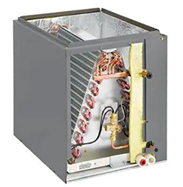
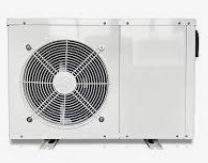
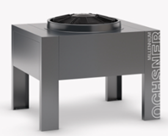
Figure 5‑3. Air heat pumps evaporator types [3]
Common types of evaporator and condenser coils when comparing evaporator coil vs condenser coil, they may differ in material, design, and purpose.
1. Materials
- Copper tube + aluminum fins: This combination remains the industry standard due to copper’s excellent thermal conductivity and aluminum’s affordability.
- Microchannel aluminum coils: These are increasingly used in compact systems for their heat transfer efficiency and smaller form factor.
2. Coatings and Treatments
- Outdoor evaporators often use hydrophilic coatings to enhance drainage and resist frost.
- Indoor condensers may need anti-limescale treatment for hard water conditions.
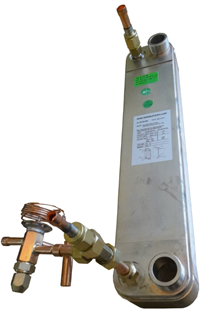
Figure 5‑4. Air- to- water and ground-to water heat pumps plate Evaporator & Condenser
3. Shape and Configuration
- Evaporators tend to be larger due to the lower heat density in outdoor air.
- Condensers are typically more compact, focused on rapid heat transfer to indoor systems.
The coils located in heating mode:
- Evaporator coil – located outdoors;
- Condenser coil – located indoors.
In cooling mode, the roles are reversed.
5.3 Defrosting
Air source heat pumps use outside air as heat source to evaporate the refrigerant. They are typically used to provide hot water for heating of buildings and are the most common type of heat pumps. In winter there is a risk that the evaporator freezes up leading to a drop in performance of the heat pump.
Air source heat pump operating in mild/cold environments, usually in between -15°C and 6°C, have issues with frost formation during operation. When the surface temperature of the fins is lower than the dew point temperature, water vapor in the air starts to condensate and with surface temperatures below zero the condensed droplets freeze, causing frost to form. The layer of frost acts as an insulation over the heat exchange area and inhibits the heat transfer from the air to the refrigerant. The blockage formed with increasing frost between the fins also leads to decreased air flow and lower convective heat transfer. This phenomenon lowers the operational performance and increases the energy consumption of the heat pump leading to a decreased COP. Increased humidity, temperature of the air and surface and velocity of the ambient air are the largest contributors to the frost formation.
The frost growth can also be explained the same way for finned tube heat exchangers with droplets condensed onto the fins and tubes that later freeze into ice crystals, frost branching creates a porous frost layer and lastly a denser frost layer is formed. As the fin surface is vertical instead of horizontal, gravity plays a role during the first growth period. The frost also forms faster between fins than on a flat cold surface after the initial condensation stage. If the heat exchanger has several tube rows, the front row has a higher percentage of accumulated ice than the others and the amount of frost decrease for every row behind, with the last row having the least frost accumulated.
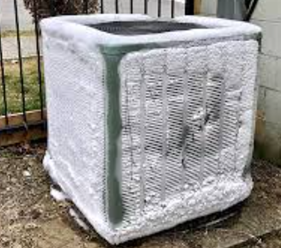
Figure 5‑5. Layer of frost on air source heat pump evaporator
As the heat pump suffers from frost growth and reduced operational performance, defrost is important to regain normal operation. Different defrost methods exists, as well as several operational strategies. They can be divided into passive and active defrost. Passive defrost is focusing on suppression methods like coating, structure of the fins and changing inlet parameters, while active defrosting techniques are actively supressing or removing ice with external energy added. Some examples are ultrasonic vibrations, electric heaters and reverse cycle hot gas defrost among others. Periodic defrosting is necessary for heat pumps used in colder climates due to the frost formation on the heat exchanger during heating operation. As the heat pump is defrosting no heat is transferred to the heat sink and during active defrost techniques the heat exchanger is heated by an external power source to melt the ice. This uses a large amount of energy as well as time where the heat pump is not transferring any usable heat to the heat sink. Therefore, it is crucial to reduce the defrosting time to a minimum to be able to return to normal operation and avoid degradation of thermal comfort.
System defrosts are divided into three different methods, on-off, electric heating and reverse cycle:
- The on-off defrost method is simple and economical where the system turns off the heating operation during defrost and let the frost melt. Since no external heat is applied to the heat exchanger the defrosting time is long, and no heat is applied to the system during that time. Due to the long defrost time the thermal comfort of the building can be affected. The method also only works for outdoor conditions over freezing temperatures.
- Electric resistive heaters are inserted in the heat exchanger reducing defrost time. This is an effective and easily installed defrost method but requires a lot of electrical power which reduce the COP of the heat pump and the extra electricity consumed can be expensive.
- The most common one is the reverse cycle hot gas defrost. Installation is more expensive than that of the electric resistive heater, but the principle of the method is to reverse the refrigerant flow in the heat pump cycle, forcing hot gas from the compressor into the heat exchanger melting the ice. This is a time effective method where the ice is defrosted slightly faster than with electric resistive heater and significantly faster than the on-off defrost. It also results in a higher COP than the other two methods.[4]
It is not only the defrost method itself that is important to improve the operational performance, but also the control strategy of the defrost. The goal of the defrost control is to assure a high COP and low operational cost.
5.4 Heat exchanger selection considerations
In cold-weather regions, especially central and northern Europe or North America, coil efficiency becomes even more important. Evaporator coils must function well in freezing air, requiring defrost cycles, wide-fin spacing, and moisture-resistant coatings. Condenser coils must deliver stable output to floor heating or radiator systems—often at 35–60°C—with high water-side efficiency.
Design differences directly impact SCOP (seasonal coefficient of performance), making coil selection a core part of heat pump engineering.
How to choose a plate heat exchanger to connect the heat pump to the heating system.Heat pumps as a heating device are quite a demanding solution from the point of view of heat exchange, which translates into the objective need to select a heat exchanger with a larger area than, for example, for classic boilers of similar power. The reason is both the fact that they usually operate at much lower deltas, as well as the desire to ensure that the heat pump works with the lowest possible power consumption, as a rule.
In the case of heat pumps, the selection depends not only on the nominal power of the HP, but also on the temperatures at which the central heating system is to operate. This is not about the maximum performance of the pump, but rather about the operating temperature that we expect from the pump so that it is able to provide thermal comfort at home. The lower it is – the larger the heat exchanger will be needed, but it is worth keeping it as low as possible, due to the expected operating costs.
The plate heat exchanger for a heat pump should be sized depending on the expected operating temperature of the pump.
The first case is a classic arrangement – in which radiators play the main role, and floor heating is possibly an addition. In such a facility, the operating temperature of the pump must be min. approx. 50 °C for the radiators to work optimally. For such systems, approx. 1.50 m² of the heating exchange area should cover each 10 kW of the heat pump (working on 50°C)[5].
The second case is facilities heated in 100% with underfloor heating, where the operating temperature of the pump will be required at the level of about 30 – 35 °C only. In such cases, the heat pump works very economically, but a relatively large heat exchanger system is needed for efficient operation – the sizing converter here is approx. 3.0 m² of heat transfer area for every 10 kW of heat pump (operation at 35°C).
Intermediate options, i.e. supply temperatures of 40 or 45 °C, should be sized proportionally. The first case typically applies to buildings based on radiator heating, while the second one mostly relates to underfloor heating. Systems supplied with intermediate temperatures or mixed systems – radiators/underfloor heating – should be treated proportionally, and plate exchangers should be selected accordingly.
The heat exchanger (internal) is an essential element in the operation of a heat pump. The heat pump operates on the principle of heat transfer, i.e., transferring thermal energy from one medium to another. In the case of space heating, the heat pump extracts heat from the external environment, such as air or soil, and transfers it into the building. The internal heat exchanger plays a crucial role here, allowing the transfer of heat between the coolant and the heating fluid without their direct contact. Thanks to this process, the heat pump can efficiently transfer heat to the rooms, ensuring their effective and economical heating. This heat exchanger is therefore an indispensable element that enables the efficient operation of the heat pump.
Very often it is called a Heat Pump Condenser – because of its function. Such a heat exchanger require special durability against high pressure – because refrigerants used a medium can easily achieve 40-45 bar.
A good heat exchanger for a heat pump is characterized by several important features. Firstly, the material from which it is made should be durable and corrosion – resistant. Stainless steel 316L is often used in this case, as it has high resistance to environmental influences and is also easy to clean.
Another important feature is the appropriate power, i.e., the ability to transfer enough thermal energy from the source to the target medium. The heat exchanger should also have a suitable heat exchange surface area (models for HP start from 0.8-1.0 m² of plate area), to ensure effective heat transfer. The larger the plate area of the exchanger, the closer we get to the possibility of the heat pump operating at lower temperatures – which guarantees lower energy consumption, i.e., savings – and statistically lower pump failure rates due to less wear and tear.
The exchanger should also be well-designed structurally to enable smooth flow of the medium and minimize flow resistance. Additionally, it is important for the heat exchanger to be easy to operate and maintain, allowing for quick and efficient cleaning and any necessary repairs. All these characteristics are crucial for the efficient operation of the heat pump and ensuring thermal comfort in buildings.
The internal exchanger, or refrigerant one, is a part of the heat pump and is rarely chosen by us, usually supplied by the manufacturer as part of the set.
5.5 Review Questions:
- Explain the roles of the evaporator and condenser in a heat pump system and how their performance affects overall system efficiency.
- Compare air-cooled and water-cooled condensers in terms of efficiency, installation complexity, and suitability for different climate conditions.
- Discuss how material choice and coil design influence heat transfer effectiveness and system durability.
- Describe the process of frost formation on an air-source evaporator. Why does it decrease the heat pump’s efficiency and require defrost cycles?
- Outline the main defrosting methods used in air-source heat pumps. Which method provides the best balance between energy efficiency and reliability in cold climates?
- Explain why a low-temperature heating system (e.g., underfloor heating) requires a larger heat exchanger area compared to a radiator system operating at higher temperatures.
- Identify the key characteristics of an efficient modern heat exchanger, including materials, coatings, and structural design features that improve heat transfer and resistance to icing or corrosion.