


Lesson 5.Refrigeration Circuit Components II: External Heat Exchangers
February 9, 2026Lesson 7. Additional Refrigeration Circuit Components
February 9, 2026Welcome to this lesson! Start by watching a recap video of this lesson.
Click on the gear icon to choose subtitles of your preferred language.
6.1 Function of the expansion valve in pressure reduction and flow control
The expansion valve does the job of reducing the pressure of the high pressure condensed liquid into a mixed vapor. The most common one you might have seen by looking into the refrigeration systems or the refrigerator we have at home is a capillary tube, which is a tube of small diameter that causes an intense friction (viscous dissipation). It is typically used for very small systems like refrigerators, but the main disadvantage of the system is it cannot change the flow of refrigerant which means that there is no feedback. So, they introduced feedback – a thermal expansion valve is used typically, where there is a bulb that senses the superheat of the refrigerant and controls the spring which can then go back and allow different volumes of refrigerant to go through the system. In this kind of design, this is typically used for changing refrigerants smaller heat pumps and chillier units but however there is a response, thermal response to the system and rapid and precise control of refrigerant cannot be achieved. So, to improve on the thermal expansion valve, the electronic expansion valves have been designed, and they are used for precise control of refrigerant flow and the capacity delivered because as, the total capacity delivered is dependent on the refrigerant flow.
The purpose of the expansion valve is to control the flow of refrigerant from the high-pressure condensing side of the system into the low-pressure evaporator. In most cases, the pressure reduction is achieved through a variable flow orifice, either modulating or two-position. Expansion valves may be classified according to the method of control.
Thermostatic expansion valves work
Thermostatic Expansion Valve (TXV) (see Figure 6‑1) is a refrigeration and air conditioning throttling device that controls the amount of refrigerant liquid injected into a system’s evaporator—based on the evaporator outlet temperature and pressure—called the superheat.
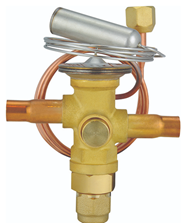
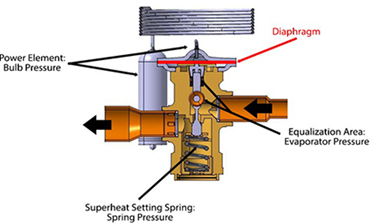
Figure 6‑1. Thermostatic expansion valve [1]
There are three different forces at work in a TXV: bulb pressure, spring pressure, and evaporator pressure (see Figure 6‑2). Bulb pressure comes from the bulb that is mounted at the outlet of the evaporator; the bulb senses the suction temperature and drives the diaphragm down if there is an increase. Spring pressure is constant and pushes up against the diaphragm, counter to the bulb pressure. The spring pressure is calibrated when the valve is set by the equipment manufacturer or the installer. Evaporator pressure pushes the diaphragm up when the suction pressure increases and comes from the evaporator load on the system, which varies according to different operating conditions, such as room temperature changes. Based on the balance between these three pressures, the valve will either open or close.
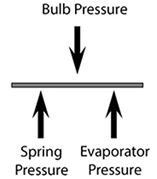
Figure 6‑2. Three different forces at work in a TXV
6.2 Overview of valve types: thermostatic, electronic, capillary tubes, etc.
Different types of refrigeration and air conditioning systems have expansion valves with different shapes and functions. Each with its features and benefits. For example, variable frequency compressors should use electronic expansion valves, and fixed frequency compressors should use thermal expansion valves or capillary tubes. Most common and available four types are Thermostatic Expansion Valve, Electronic Expansion Valve, Capillary Tube Expansion Valve and Automatic Expansion Valve.
Thermostatic Expansion Valve (TXV)
The thermostatic expansion valve is one of the earliest expansion valves invented, and this type of expansion valve is mainly used in refrigeration and air conditioning systems, because of its mechanical construction. This is why thermostatic expansion valves have the highest market share and are used in a wide range of applications.
Thermostatic expansion valves can be used for transport refrigeration units, cold room refrigeration units, semi-hermetic condensing units, walk-in cooler refrigeration units, Copeland scroll outdoor condensing units, commercial outdoor refrigeration units, heat pumps drying machines, swimming pool heat pumps, etc.
The fields involved in the thermostatic expansion valve include cold storage, transportation refrigeration, medicine, food, supermarkets, air conditioners, heat pumps, etc.
Because the market demand for thermostatic expansion valves is huge, there are many brands of thermostatic expansion valves. Such as Danfoss (Denmark), Emerson (US), Saginomiya (Japan) Sanhua (China), Sporlan (US), STF (China), DUNAN (China), Sina (China), etc.
TXV control the injection of liquid refrigerant into evaporators and protect the compressor motor against liquid refrigerant. The thermostatic expansion valve allows you to keep a constant superheat (or refrigerant level) at varying load situations in the refrigeration system to save energy.
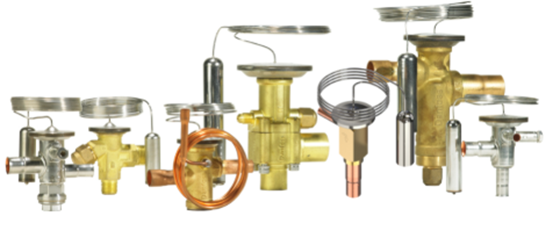
Figure 6‑3. Thermostatic expansion valve for domestic heat pump [2]
Electronic Expansion Valve (EEV or EXV)
With the development of split refrigeration compressors and air conditioning compressors, the rise and development of electronic expansion valves have been promoted (Copeland, Panasonic, Hitachi, Mitsubishi, GMCC, Daikin, etc.).
The electronic expansion valve is controlled electronically, which achieves precise control of the refrigerant flow. Compared with mechanical thermostatic expansion valves, electronic expansion valves have the advantages of precise temperature control, wide temperature adjustment range, and rapid response.
The significant difference between a TXV and an EEV is that a thermostatic expansion valve is a mechanical device. In contrast, an electronic expansion valve is a programmable device that optimizes the required performance.
An electronic expansion valve has some additional parts to make it run, for example, the controller and sensor. On the other hand, a thermostatic expansion valve doesn’t have any extra components.
The working principles of both of these valves are also different. A TXV senses the temperature with a liquid-filled sensing bulb, and the gas pressure on it forces it to open the TXV. This force decreases when the temperature drops and adjusts the refrigerant flow. Expansion valves of either type regulate refrigerant flow by sensing the degree of superheating and subcooling in the system.
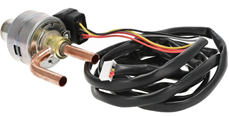
Electronic expansion valve for domestic heat pump
The valve reduces the pressure of the condensed refrigerant at the end of the cycle, provides for a controlled inflow into the evaporator and prevents overpressure.
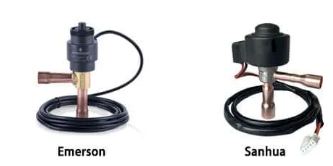
Danfoss
Figure 6‑4 Electronic expansion valve for domestic heat pump [3].
Capillary tube expansion valve
The capillary tube is the most economical, lowest cost, and lowest failure rate expansion valve. The simplest and most cost-effective expansion valve out there, consisting of a small-diameter capillary tube. This wound-up copper tube is designed to receive hot, high-pressure liquid refrigerant from the condenser. In a capillary tube, the refrigerant flow is restricted by the tube’s size.
The diameter and length of the capillary tube therefore directly determine the energy efficiency of the expansion valve. If you compare a capillary tube expansion valve with a thermostatic expansion valve and an electronic expansion valve, it is the most durable and cost-effective option because of its small size, simple design, and lack of moving parts.
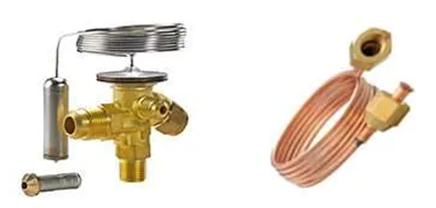
Figure 6‑5 The Capillary tube expansion valve [4]
Automatic Expansion Valve (AEV)
The difference between AEV and TXV is that a TXV doesn’t have an external thermal sensing device. An automatic expansion valve adjusts the valve opening according to the evaporator pressure, maintaining a constant superheat. It utilizes a pressure-actuated diaphragm to ensure a consistent pressure within the evaporator is maintained.
An automatic expansion valve is mostly used in HVAC&R applications where the load is constant. Air conditioning system commonly has frequent fluctuations during operation, which makes it less suitable for this valve. However, automatic expansion valves can be used in other constant temperature applications like milk chilling units, ice breakers, home freezers, and small commercial refrigeration units.
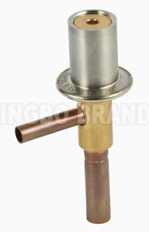
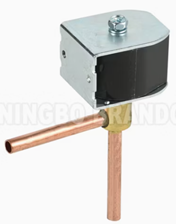
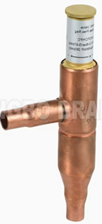
Figure 6‑6. The Automatic expansion valve
6.3 Review Questions
- Describe the primary function of an expansion valve in a vapour compression refrigeration system. How does it regulate refrigerant flow between the condenser and evaporator?
- List the four main types of expansion devices used in heat pumps and refrigeration systems and briefly explain where each type is typically applied.
- Explain how a thermostatic expansion valve (TXV) maintains a constant superheat in the evaporator and why this is essential for system protection and efficiency.
- Compare the operation of a TXV and an electronic expansion valve (EEV). What advantages does electronic control provide in modern variable-speed heat pumps?
- Why is it important for the refrigerant leaving the evaporator to be slightly superheated before entering the compressor? What risks arise if the superheat is too low or too high?
- The capillary tube is simple and low-cost but lacks feedback control. Discuss how this design limitation affects system performance under varying load conditions.
- Explain how fluctuations in evaporator pressure influence the opening and closing behavior of a thermostatic expansion valve. What might happen if the system experiences rapid load changes?
- In a heat pump system operating with R410A, the use of an electronic expansion valve (EEV) improves performance during partial load operation. Explain why precise refrigerant control is especially beneficial in inverter-driven systems.