

Lesson 8.Ancillary Components in Heat Pump Systems
February 9, 2026Lesson 5.Refrigeration Circuit Components II: External Heat Exchangers
February 9, 2026Welcome to this lesson! Start by watching a recap video of this lesson.
Click on the gear icon to choose subtitles of your preferred language.
3.1 Introduction to refrigerants and their role in the cycle
A refrigerant is the working fluid in a refrigeration or heat-pump system; it undergoes cyclic changes of pressure and temperature and typically phase changes (liquid-vapor) to absorb and reject heat (Figure 3‑1. Phase change of refrigerant in vapor compression cycle Figure 3‑1). In reality, no fluid is perfect, so refrigerant selection always involves balancing different advantages and disadvantages. The concept of an ideal refrigerant gives a set of desired properties, but improving one property often makes another property worse (for example, making the global warming potential very low may reduce thermodynamic efficiency), so the ideal is always a compromise[1],[2].
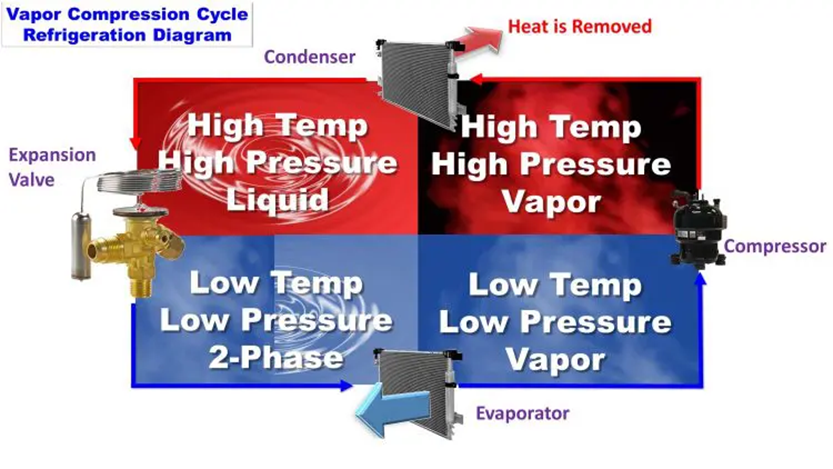
Figure 3‑1. Phase change of refrigerant in vapor compression cycle [3]
Key criteria for refrigerant selection include:
a) Performance
- high latent heat of vaporization: so that a smaller mass flow is needed for a given cooling load;
- “acceptable” condensation and evaporation pressures in the operating range (i.e., the saturation pressures at design temperatures should not be too low or too high);
- low-pressure drop-in piping and heat exchangers (i.e., low viscosity, high thermal conductivity);
- high volumetric cooling capacity: for example, good density, so components can be more compact;
- reasonable ratio of specific heats (affecting compression work);
- stable thermodynamic behaviour (predictable property models, no high nonidealities).
b) Safety, Environmental, and Practical
- Safety and stability: The refrigerant should be non-toxic or have low toxicity, exhibit no or low flammability (or at least manageable flammability risks), be chemically stable and non-corrosive, and must not degrade, polymerize, or react with system materials or lubricants.
- Material compatibility: It must be compatible with all components in the refrigeration system, including metals, seals, gaskets, and lubricating oils.
- Environmental considerations: The fluid should have minimal environmental impact, with zero or negligible Ozone Depletion Potential (ODP) and a low Global Warming Potential (GWP).
- Economic and practical factors: Low cost, ease of production, and reliable supply are important.
- Handling and end-of-life: The refrigerant should allow for easy leak detection, as well as straightforward recycling or safe disposal.
- Operating conditions: System pressures should remain within a safe and practical range—not excessively high or low.
- Lubricant behaviour: Good miscibility with lubricants, or otherwise acceptable lubricant behaviour, is required for proper system operation.
Because improving one property can often worsen another, refrigerant selection always involves a balance between thermodynamic performance, safety, environmental impact, and practical engineering considerations30.
3.2 Naming conventions and classification systems
Refrigerants are named using R-numbers, which indicate chemical composition and structure (Figure 3‑2). The ASHRAE system is the industry standard, complemented by international ISO 817:2024 Refrigerants — Designation and safety classification for safety and environmental classification. Refrigerants are grouped into chemical families: CFCs (chlorofluorocarbons, e.g., R-12) have been phased out for high ODP and GWP; HCFCs (hydrochlorofluorocarbons, e.g., R-22) are transitional and also being phased out; HFCs (hydrofluorocarbons, e.g., R-134a, R-410A, R-32) have zero ODP but high GWP; HFOs (hydrofluoroolefins, e.g., R-1234yf, R-1234ze) have zero ODP and ultra-low GWP; hydrocarbons (HCs, e.g., R-290, R-600a) are natural, with zero ODP and very low GWP but are flammable; and inorganics (e.g., R-717 ammonia, R-744 CO₂) have zero ODP, very low GWP, and unique safety challenges.
ISO 817 and ASHRAE Standard 34 label refrigerants by toxicity (A=lower, B=higher) and flammability (1=low, 2L=lower, 2=intermediate, 3=high). For example, R-290 (propane) is A3 (low toxicity, high flammability); R-134a is A1; ammonia (R-717) is B2L. (Table 3‑1)
Figure 3‑2. ASHRAE’s Numbering System for Refrigerants (example for R50) [4]
Table 3‑1. Refrigerant ASHRAE safety classes 32
3.3 Key thermodynamic and environmental properties
The boiling point, critical temperature and pressure, viscosity, and enthalpy of vaporization of a refrigerant directly affect system design and efficiency. Higher density (volumetric capacity) allows for more compact equipment, and the ratio of specific heat influences compressor work. Stable thermodynamic behaviour is important for predictable system operation.[5]
Environmental properties are now central to refrigerant selection (Table 3‑2). ODP is zero for all modern refrigerants, while GWP is a key regulatory and environmental concern. For example, CO2 has a GWP of 1, while many HFCs have GWPs above 1400. Shorter atmospheric lifetimes are preferred to reduce total environmental effect.
Safety and compatibility are also critical. Flammability and toxicity must be managed, especially with hydrocarbons and ammonia. Refrigerant stability and compatibility with metals, seals, and oils are vital for reliability and safety. Operating pressures should not be extreme for safety and cost reasons.
Table 3‑2. Thermophysical properties of the low-GWP refrigerants [6]
| Refrigerant | Type | GWP | ODP | Safety | Typical Application | Key Advantages | Key Limitations |
| R-410A | HFC blend | 2088 | 0 | A1 | Air/water heat pumps | Non-flammable, reliable | High GWP |
| R-32 | HFC | 675 | 0 | A2L | Air/water heat pumps | High efficiency, lower GWP | Mildly flammable |
| R-454B | HFC/HFO blend | 466 | 0 | A2L | New systems | Low GWP, efficiency | Mildly flammable |
| R-290 | HC | 3 | 0 | A3 | Domestic /commercial | Very low GWP, efficient | Highly flammable |
| R-744 | CO2 | 1 | 0 | A1 | Industrial, commercial | Non-flammable, zero GWP | High pressure, efficiency drop at high temp |
| R-134a | HFC | 1430 | 0 | A1 | Water heaters, tumble dryers | Non-flammable, reliable | High GWP |
| R-1234yf | HFO | 4 | 0 | A2L | Vehicle, new systems | Very low GWP | Mildly flammable |
| R-407C | HFC blend | 1770 | 0 | A1 | Water/ ground heat pumps | Non-flammable | High GWP |
| R-717 | Ammonia | 0 | 0 | B2L | Industrial | Zero GWP, high efficiency | Toxic, corrosive |
| R-436A | HC blend | 3 | 0 | A3 | Residential | High SCOP, low GWP | Highly flammable |
3.4 Trends in refrigerant development
In recent decades, strict international policies—including the Montreal Protocol, its Kigali Amendment, and the EU F-Gas Regulation—have driven a substantial reduction in the use of high–GWP hydrofluorocarbons (HFCs). As a result, the transition toward alternative refrigerants with far lower environmental impact has become essential. Among the most prominent substitutes are hydrofluoroolefins (HFOs), exemplified by R-1234yf and R-1234ze, which exhibit ultra-low GWP values while maintaining thermodynamic performance comparable to legacy HFCs. Concurrently, natural refrigerants—including carbon dioxide (R-744), ammonia (R-717), and hydrocarbons such as propane (R-290) and isobutane (R-600a)—are gaining traction due to their negligible GWP and ozone depletion potential (ODP). Hybrid blend formulations combining HFOs and HFCs (e.g., R-452B, R-513A) are additionally employed as transitional solutions to mitigate abrupt operational disruptions[7].
The transition to low-GWP refrigerants naturally entails the use of substances with mild to moderate flammability, particularly those classified under A2L and A3 safety categories. This shift has spurred significant research and development to embed robust safety mechanisms into heat pump systems. Key measures include advanced leak detection, improved ventilation strategies, restrictions on refrigerant charge volumes, and strict compliance with updated safety standards—notably the IEC 60335-2-40 revisions, which support the wider adoption of flammable refrigerants in both residential and commercial HVAC&R systems. In parallel with environmental objectives, maintaining or enhancing system efficiency remains paramount. Scholars focus considerable attention on the thermophysical properties of emerging refrigerants, striving to achieve parity or superiority over traditional HFCs in key parameters such as enthalpy of vaporization, operating pressure ranges, and volumetric cooling capacity. This performance alignment is critical to circumvent extensive redesign costs and to facilitate smoother market adoption. Additionally, increased volumetric capacities promote more compact, cost-effective heat pump designs[8].
Introducing novel refrigerants necessitates the re-evaluation and redesign of core components, including compressors, heat exchangers, and expansion devices. Ensuring material compatibility, particularly regarding lubricants and elastomers, constitutes a vital element of sustaining long-term system reliability and longevity. Notably, gases such as CO₂ exploit transcritical cycles that preclude direct retrofitting, compelling comprehensive redesign efforts to harness their unique thermodynamic characteristics[9].
Beyond focusing solely on direct emissions—chiefly refrigerant leakage—there is heightened recognition of indirect impacts, predominantly electricity consumption. Holistic metrics like Total Equivalent Warming Impact (TEWI) and Life Cycle Climate Performance (LCCP) increasingly guide refrigerant assessments, encompassing production, operation, and end-of-life phases. Furthermore, strategies advocating for efficient refrigerant recovery, recycling, and environmentally responsible disposal gain prominence within lifecycle management frameworks[10],[11].
Modern refrigerant selection avoids singular priority models in favor of multi-faceted decision paradigms balancing thermodynamic performance, safety, environmental impact, economic cost, supply availability, regulatory compliance, and application specificity. Thus, differing applications—ranging from domestic heat pumps to industrial refrigeration—demand tailored refrigerant solutions aligned with operational and regulatory contexts[12].
In summary, the evolution of refrigerant technology highlights a clear shift away from conventional high-GWP synthetic compounds toward a diverse mix of low-GWP HFOs, natural refrigerants, and advanced blends. This transformation drives system-wide innovation, promotes enhanced safety solutions, and encourages flexible regulatory adaptation, all striving to achieve an optimal balance between high performance and environmental sustainability.
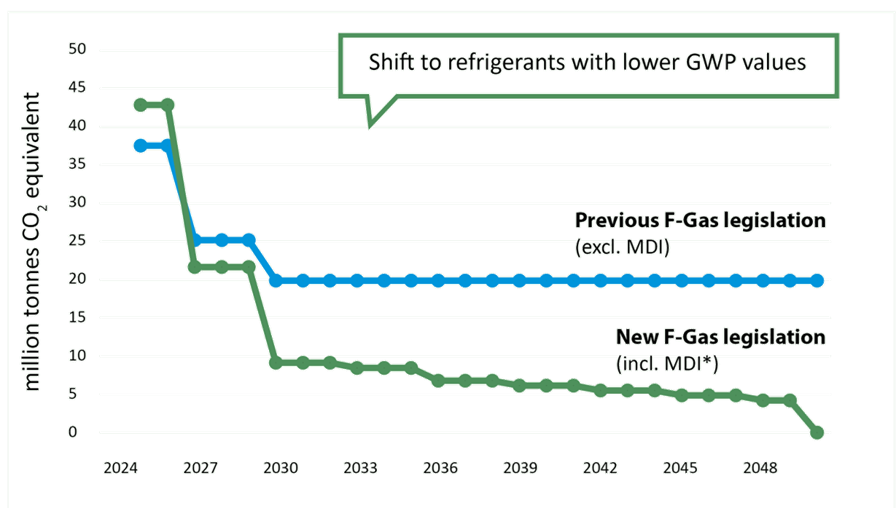
Figure 3‑3. EU progress under the hydrofluorocarbon phase-down set out in the EU F-gas Regulation [13]
3.5 Guidelines for selecting appropriate refrigerants for different applications
Selecting a suitable refrigerant depends strongly on the intended application, because thermodynamic behaviour, safety requirements, environmental regulations, and engineering constraints vary across sectors. No single refrigerant satisfies all criteria simultaneously; therefore, selection involves balancing performance, safety, environmental impact, and practical factors.
Domestic Refrigeration
Domestic refrigerators typically operate at low condenser temperatures and modest pressures. Priority is placed on safety, low GWP, and high efficiency. R600a (isobutane) has become the dominant choice worldwide due to its excellent energy performance, very low GWP (~3), and compatibility with small hermetic compressors. Modeling studies highlight how charge optimization and operating parameters influence energy use[14]. Reviews identify hydrocarbons as mature alternatives provided charge sizes remain within regulatory safety limits[15]. Integration of phase change materials (PCMs) can further reduce cycling losses and stabilize cabinet temperatures[16].
Commercial Refrigeration
Commercial refrigeration (e.g., supermarkets) requires higher capacities, longer piping, and robust performance under varying ambient conditions. Traditional HFC blends (e.g., R404A) are being phased out due to their high GWP. CO₂ (R744) systems, hydrocarbon plug-in units, and low-GWP blends are now preferred. Reviews show how the commercial sector has rapidly shifted toward CO₂ booster systems[17].
Advanced cycle configurations—such as ejectors, parallel compression, and dedicated mechanical subcooling (DMS)—are increasingly used to improve efficiency in warm climates [5–8]. These measures allow R744 systems to match or exceed the performance of HFC/HFO blends even in challenging ambient conditions (Figure 3‑4).
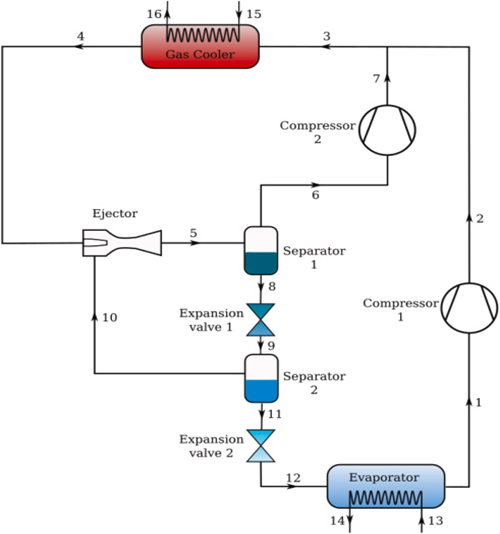
Figure 3‑4. Schematic of the Advanced cycle configuration [18]
Industrial Refrigeration
Industrial refrigeration systems, e.g., cold stores, food processing, operate with large capacities, prioritize energy efficiency, and have well-trained operators. Ammonia (R717) remains the dominant refrigerant thanks to its excellent thermodynamic properties, low cost, and zero GWP[19].
Safety considerations are addressed through design and regulation. Recent reviews focus on risk assessment methods and on ammonia absorption cycles to recover waste heat. Operational optimization—such as load-side energy management—can further improve plant efficiency[20],[21],[22].
Transport Refrigeration
Transport refrigeration systems (e.g., trucks, containers, vehicles) require compact, robust, and often low-charge systems. R134a has traditionally been used in mobile A/C, but low-GWP alternatives like R1234yf are now standard in new vehicles. Comparative studies show that R1234yf can match R134a with suitable system optimization[23],[24],[25] while CO₂ is competitive for buses and heat pump operation[26].
In eutectic transport systems, widely used in Europe (Figure 3‑5). Companies investigate refrigerant charge reduction in low-temperature systems, economizer and intermediate heat exchanger enhancements[27], and develops theoretical/experimental methods for low-charge designs[28]. More recent work evaluates new low-GWP refrigerants for eutectic cycles.
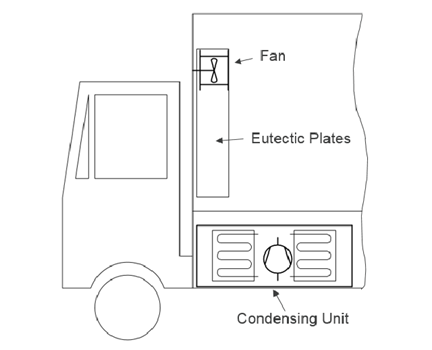
Figure 3‑5 Schematic of a eutectic refrigeration system in a truck [29]
3.6 Review Questions
- What are the main thermodynamic and environmental criteria for selecting a refrigerant in a heat pump system?
- How does the ASHRAE/ISO classification system label refrigerant safety, and why is this important for system design?
- Why are low-GWP refrigerants not always direct drop-in replacements for older refrigerants?
- Describe the main advantages and limitations of using R-290 (propane) in residential heat pumps.
- What are the key regulatory trends in Europe affecting refrigerant selection for heat pumps?
- How do zeotropic blends and advanced cycle designs improve heat pump efficiency with new refrigerants?
- What special considerations are needed when using ammonia (R-717) or CO₂ (R-744) in heat pump systems?
- Why is it important to consider both direct and indirect emissions when evaluating the environmental impact of a refrigerant?